
City-led planning
Workforce scope aligned with Jeddah operating conditions
City workforce support
Plan coastal property inspections, approved cleaning methods and escalation for Jeddah offices, hotels and commercial buildings.
Employer-facing manpower supply and workforce support for Jeddah operations.
A Jeddah coastal building plan should describe the actual property rather than apply one schedule to every address. Record exposed elevations, sheltered entrances, glazing access, material finishes and the routes used by visitors and deliveries. Buildings near the coast can have different exposure from one another because layout, shelter and operating conditions vary. Use site observations and the facilities team’s records to decide where inspection and cleaning need more attention.
The Whole Building Design Guide identifies chlorides and moisture as contributors to coastal corrosion risk. That technical context does not establish a corrosion rate for a particular Jeddah property. Cleaning staff can report visible staining, coating changes or deterioration; the responsible maintenance professional should assess the material, cause and repair. Do not treat scrubbing or repainting as a substitute for a technical assessment where the condition is uncertain.
EPA guidance explains that moisture control is central to preventing mould growth. For a commercial property, report leaks, condensation and recurring damp areas to the facilities team rather than repeatedly cleaning the visible symptom. The employer should define who investigates the cause and how an affected area is managed. This is technical guidance, not a Saudi regulatory humidity limit or a diagnosis of a particular building.
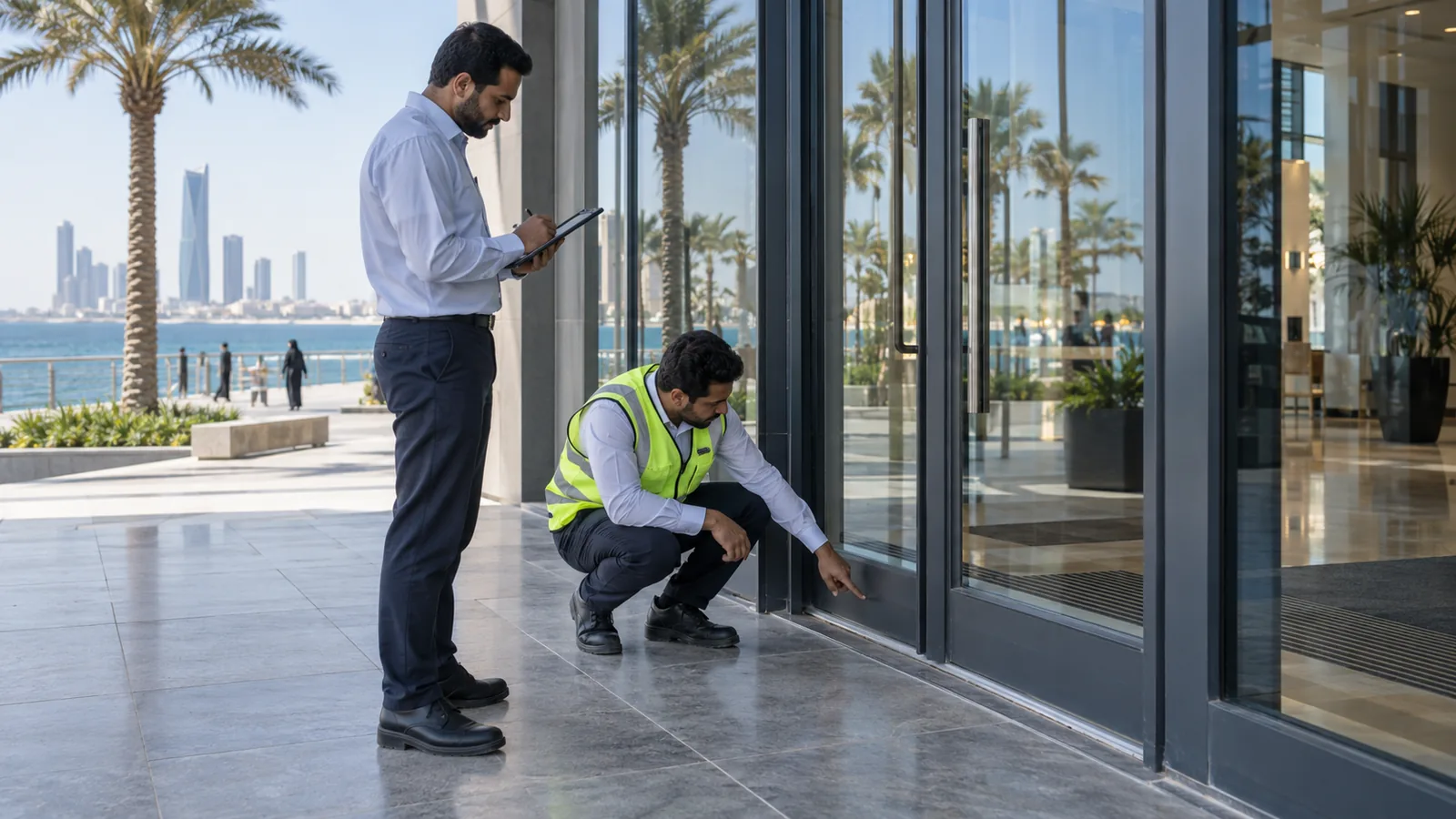
Check entrance mats, thresholds, reception floors and accessible door tracks against the property’s agreed inspection routine. Dust and material tracked indoors can change with deliveries, occupancy and weather. Record where the problem recurs, what cleaning was completed and whether an entrance arrangement needs review. Coordinate wet work with the operating team so barriers, access and visitor communication are ready before cleaning begins.
Identify the glass, frame and coating specifications and obtain the approved cleaning method. Do not assume one chemical or abrasive is suitable for all glazing, metal and stone surfaces. Confirm whether an area is safely accessible to the routine team or needs an appointed specialist. High-level glazing and facade work require their own access arrangement; general cleaning staff should not improvise ladders or reach outside their authorised scope.
Map the places where loose material repeatedly accumulates: entrances, accessible ledges, loading areas and busy circulation routes. Select methods and equipment through the employer’s approved cleaning procedure and material instructions. Avoid moving dust from one zone into another or into occupied air. Keep observations tied to a location and time so the facilities team can distinguish a single delivery issue from a recurring operational pattern.
External vent surfaces and accessible grilles may be part of an agreed cleaning scope, but internal equipment servicing is a separate task. State who may isolate, open or inspect systems and who records completion. Report a recurring damp patch or suspected contamination through the property’s escalation route. Do not let a routine cleaning instruction expand into electrical, HVAC or specialist remediation work without the responsible owner’s review.
For offices, coordinate meeting rooms, arrival peaks and after-hours access. For hotels, agree guest-facing presentation checks, service corridors and occupied-area restrictions with the operations team. For shared commercial properties, distinguish common areas from tenant-controlled space and record who can approve access. Use the same inspection logic while keeping the schedule and acceptance criteria specific to the actual building.
Use a short record: area checked, observation, approved action, completion time, remaining issue and responsible owner. Review the record with facilities management to decide whether a repeated problem needs a change in frequency, method, access or maintenance intervention. Do not promise that cleaning alone prevents all damage. The value of the record is that it makes recurring conditions visible and assigns the next action.
Record material instructions, visible changes, accessible areas and specialist access needs.
Check mats, thresholds, floor edges and visitor routes; coordinate barriers and wet work.
Log leaks, condensation and recurring damp locations; assign investigation to the facilities team.
Confirm tools, approved methods, team duties and escalation for work outside routine cleaning.
Keep observations, completion records and unresolved actions by zone and owner.
No. Review actual exposure, finishes, traffic and recurring observations with the facilities team.
They can report visible observations. Diagnosis and repair decisions belong to the responsible maintenance professional.
Only where the approved scope and safe access arrangement explicitly cover it. Otherwise use the appointed specialist route.
The location, observation, action taken, operating restriction if applicable and the facilities owner responsible for investigation.
AL AHAD GROUP JOB SEEKER UPDATES
Follow the AL AHAD GROUP Saudi job channel for vacancy announcements and practical job-seeker guidance. Following the channel does not guarantee shortlisting, selection, visa processing or employment.